
Electricity powers nearly every aspect of modern life. The moment you switch on a light, charge your phone, run an air conditioner, or brew your morning coffee, you’re tapping into one of the most sophisticated engineering systems ever created. Yet most people rarely think about what happens between the power plant and the wall outlet.
The journey of electricity from generation to consumption involves massive power stations, high-voltage transmission networks, substations, transformers, and local distribution systems working together seamlessly. This vast infrastructure spans hundreds or even thousands of miles, delivering electricity almost instantly to millions of homes and businesses.
Understanding how electricity travels from a power plant to your home not only helps you appreciate the complexity of the electrical grid but also explains why power outages occur, why transformers are mounted on poles, and why high-voltage transmission lines are necessary.
Let’s follow electricity step by step from its creation to the moment it reaches your home.
Step 1: Electricity Is Generated at a Power Plant
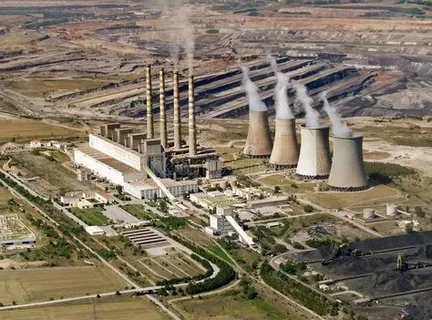
Everything begins at a power generation facility.
Power plants convert different forms of energy into electrical energy. Depending on the type of power plant, the source energy may come from:
- Coal
- Natural gas
- Nuclear reactions
- Hydroelectric dams
- Wind turbines
- Solar farms
- Geothermal sources
Regardless of the energy source, the goal remains the same: to produce electricity.
How Generators Create Electricity
Most power plants utilize generators that operate based on the principle of electromagnetic induction, a concept discovered by physicist Michael Faraday.
Inside a generator:
- A turbine spins rapidly.
- The turbine rotates a large magnet.
- The rotating magnetic field moves around coils of wire.
- This movement creates an electric current.
The faster the turbine spins, the more electricity the generator can produce.
For example:
- A coal plant burns fuel to create steam.
- The steam spins a turbine.
- The turbine drives a generator.
- Electricity is produced.
Wind turbines and hydroelectric dams achieve the same result through moving air or water rather than steam.
Why Electricity Can’t Be Sent Directly to Homes
At first glance, it might seem logical to send electricity straight from the power plant to houses.
However, this would be extremely inefficient.
Whenever electricity travels through a wire, some energy is lost as heat due to electrical resistance.
The amount of energy lost depends largely on the current flowing through the wires.
Higher current means:
- More heat
- More wasted energy
- Greater transmission costs
Engineers solve this problem by increasing voltage and decreasing current.
This is why electricity generated at power plants undergoes voltage transformation before entering the transmission network.
Step 2: Voltage Is Increased Using Step-Up Transformers
Before electricity leaves the power plant, it passes through a step-up transformer.
A transformer changes voltage levels without changing the total amount of power significantly.
The electricity produced by generators may initially be around:
- 11 kV
- 13.8 kV
- 25 kV
For long-distance transmission, this voltage is increased dramatically to:
- 110 kV
- 220 kV
- 400 kV
- 500 kV
- Even higher in some countries
By increasing voltage, utilities can move the same amount of power while reducing current.
Benefits include:
- Lower energy losses
- Reduced the heating of wires
- Greater transmission efficiency
- Lower operating costs
Without step-up transformers, modern power grids would be economically impossible.
Step 3: Electricity Travels Through High-Voltage Transmission Lines
Once the voltage has been increased, electricity enters the transmission system.
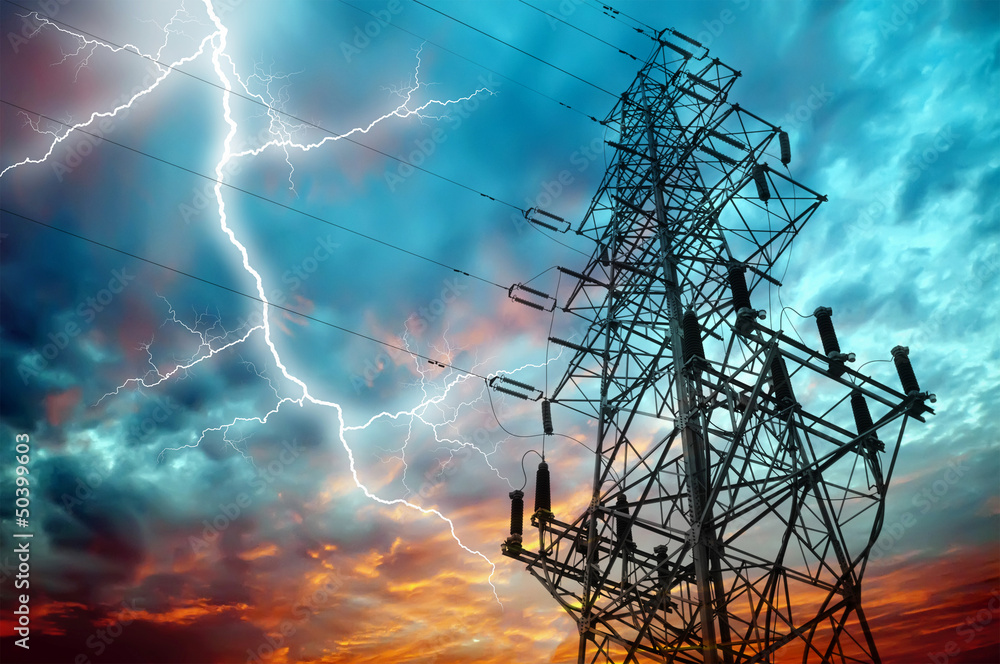
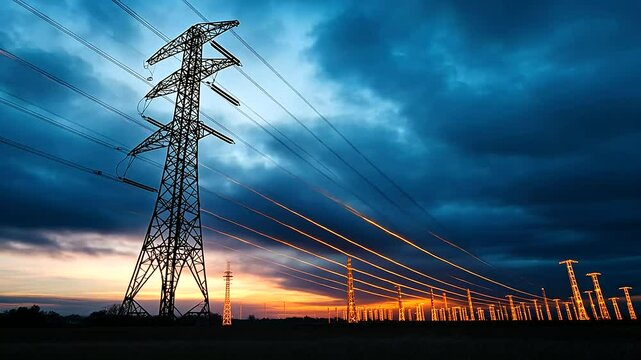
These are the large towers and power lines you see crossing countryside areas, mountains, and cities.
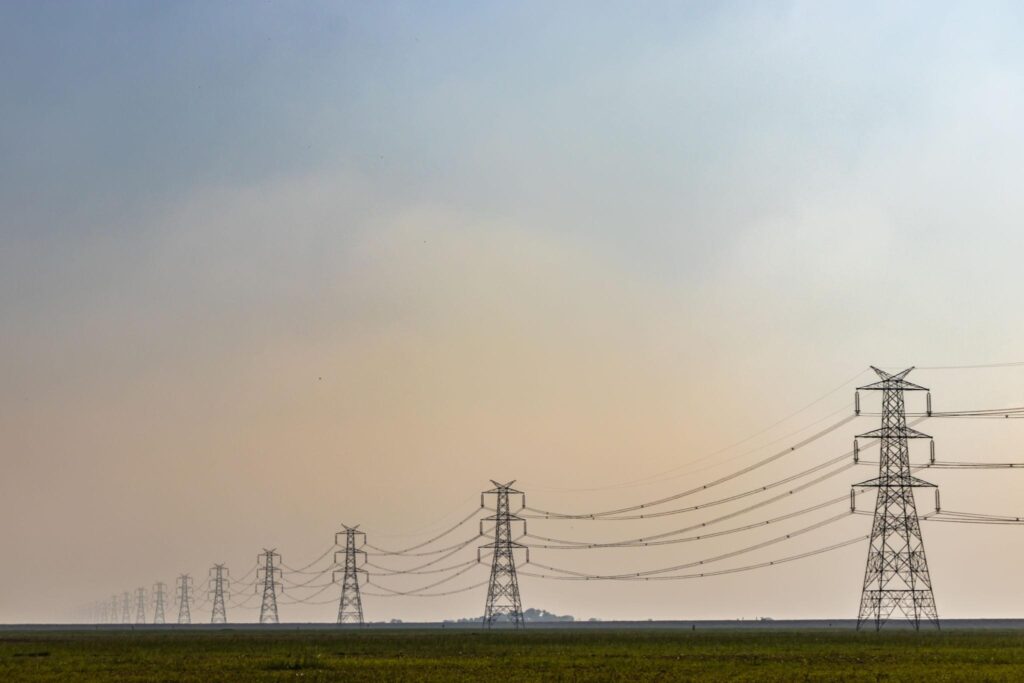
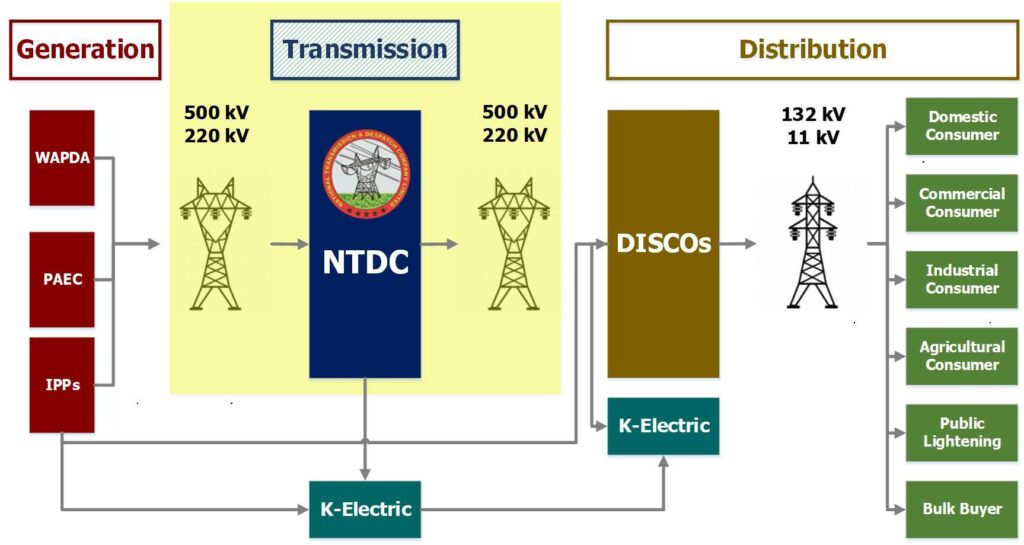
The transmission grid acts like a national highway system for electricity.
Its purpose is to move enormous amounts of electrical energy over long distances.
Transmission lines connect:
- Power plants
- Substations
- Industrial facilities
- Cities
- Regional power networks
Electricity often travels hundreds of miles before reaching consumers.
Why Transmission Towers Are So Tall
High-voltage electricity requires significant clearance from people, buildings, and vegetation.
Tall towers provide:
- Safety
- Reduced risk of accidental contact
- Better reliability
- Protection during storms
The spacing between wires also prevents electrical arcing, which can occur when the voltage becomes high enough to jump through air.
Understanding the Electrical Grid
The transmission system is part of a much larger network called the electrical grid.
The grid is one of the largest machines ever built.
It consists of:
- Power plants
- Transmission lines
- Transformers
- Substations
- Distribution networks
- Control centers
Grid operators continuously balance electricity supply and demand.
One unique characteristic of electricity is that it cannot be easily stored in massive quantities using conventional methods.
As a result:
- Electricity must be generated as needed.
- Supply and demand must remain balanced.
- Frequency and voltage must stay within narrow limits.
If demand suddenly increases, additional generators may need to come online within minutes.
Step 4: Electricity Arrives at a Transmission Substation
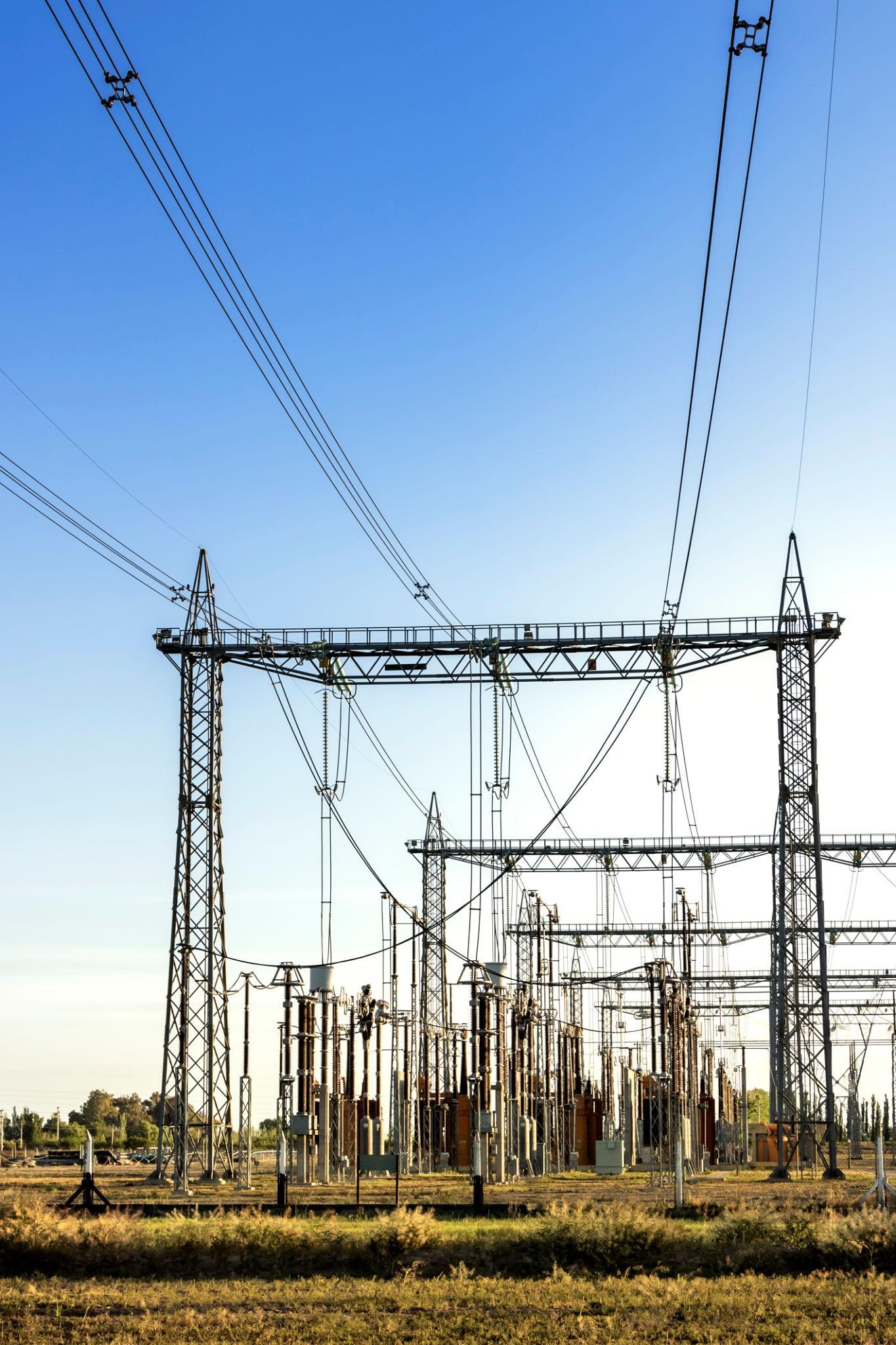
After traveling long distances, electricity reaches a transmission substation.
Substations serve as major control points within the grid.
Their functions include:
- Switching circuits
- Monitoring power flow
- Protecting equipment
- Adjusting voltage levels
- Routing electricity to different regions
A transmission substation often resembles a large fenced facility filled with:
- Transformers
- Circuit breakers
- Busbars
- Insulators
- Monitoring equipment
These facilities are critical because they allow operators to direct electricity where it is needed most.
Step 5: Voltage Is Reduced for Distribution
The extremely high voltages used in transmission are too dangerous and impractical for local neighborhoods.
Therefore, substations use step-down transformers to lower the voltage.
Typical reductions include:
| Transmission Voltage | Distribution Voltage |
| 500 kV | 69 kV |
| 230 kV | 33 kV |
| 132 kV | 11 kV |
| 110 kV | 13.8 kV |
At this stage, electricity enters the distribution network.
Think of this as the transition from major highways to city streets.
The distribution system brings electricity closer to homes, schools, offices, and businesses.
Step 6: Local Distribution Lines Deliver Electricity to Neighborhoods
Distribution lines carry electricity throughout towns and cities.
These are the utility poles commonly seen along roads and residential streets.
Unlike transmission lines, distribution systems operate at lower voltages.
Typical distribution voltages include:
- 4 kV
- 11 kV
- 13.8 kV
- 33 kV
These voltages are still dangerous and unsuitable for household use, but are much easier to manage locally.
Utilities design distribution networks with multiple routes whenever possible.
This redundancy allows electricity to be rerouted if:
- Equipment fails
- Storm damage occurs
- Maintenance is required
Such flexibility improves reliability and reduces outages.
Why Transformers Are Mounted on Utility Poles
If you’ve ever looked up at a utility pole, you’ve probably noticed a cylindrical metal container mounted near the top.
That’s a distribution transformer.
Its job is to reduce voltage one final time before electricity enters homes.
Distribution transformers perform the last major voltage conversion in the journey.
For example:
- Distribution line voltage: 11,000 volts
- Household voltage: 120 or 240 volts
Without these transformers, household appliances would be instantly destroyed.
Step 7: Electricity Enters the Service Drop
The final connection between the utility system and your home is called the service drop.
This is the cable running from:
- A utility pole to your house
- Or an underground distribution system to your property
The service drop delivers electricity from the transformer directly to your home’s electrical service panel.
At this point, the voltage is suitable for residential use.
In many countries:
- Standard outlets operate around 120 volts or 230 volts.
- Large appliances may use higher voltages.
Examples include:
- Electric ovens
- Water heaters
- Air conditioners
- Clothes dryers
Step 8: The Electric Meter Records Usage
Before electricity reaches your home’s wiring, it passes through an electric meter.
The meter measures:
- Total energy consumption
- Usage patterns
- Billing information
Older meters used mechanical spinning disks.
Modern smart meters can:
- Send data automatically
- Provide real-time usage information
- Detect outages
- Support dynamic pricing
Smart meters allow utilities to monitor grid performance more efficiently while giving consumers better insight into energy use.
Step 9: Electricity Reaches the Main Service Panel
After passing through the meter, electricity enters the main electrical panel.
This panel acts as the home’s distribution center.
Inside are circuit breakers that divide electricity into separate circuits.
Each circuit supplies power to specific areas, such as:
- Kitchen outlets
- Lighting circuits
- Bedrooms
- HVAC systems
- Laundry rooms
The panel also provides protection.
If excessive current flows through a circuit, the breaker trips and disconnects power.
This prevents:
- Overheating
- Electrical fires
- Equipment damage
How Electricity Flows Inside Your Home
Once electricity enters household circuits, it travels through wiring hidden inside walls and ceilings.
When you turn on a device:
- A complete electrical path is created.
- Current flows through the appliance.
- The appliance converts electrical energy into useful work.
Examples include:
| Appliance | Energy Conversion |
| Light bulb | Light and heat |
| Fan | Mechanical motion |
| Heater | Heat |
| Television | Light and sound |
| Refrigerator | Cooling |
The entire process occurs almost instantly.
From power plant to appliance, electricity effectively moves at speeds approaching the speed of light within the electrical system.
What Happens During a Power Outage?
Because electricity passes through numerous pieces of equipment, failures can occur at various points.
Common causes include:
- Storm damage
- Fallen trees
- Lightning strikes
- Equipment failures
- Vehicle accidents
- Maintenance work
- Excessive demand
When a fault occurs, protective systems respond within fractions of a second.
These systems include:
- Relays
- Circuit breakers
- Automated switches
Their purpose is to isolate damaged sections while keeping as much of the grid operational as possible.
How Renewable Energy Fits Into the Grid
The traditional model involved large centralized power plants supplying electricity to consumers.
Today, renewable energy is changing the system.
Solar panels, wind farms, and battery installations can inject electricity at various points within the grid.
Examples include:
- Utility-scale solar farms
- Community solar projects
- Residential rooftop solar systems
- Large battery storage facilities
This creates a more distributed and flexible electrical network.
However, managing renewable energy requires sophisticated control systems because sunlight and wind conditions change constantly.
Grid operators must continuously balance these fluctuations while maintaining reliability.
The Future of Electricity Delivery
Electrical grids are becoming smarter and more advanced every year.
Modern technologies include:
- Smart meters
- Automated substations
- Artificial intelligence monitoring
- Grid-scale batteries
- Advanced forecasting systems
- Electric vehicle integration
Future power systems will likely become more resilient, efficient, and environmentally friendly.
Microgrids and decentralized energy systems may allow neighborhoods to generate and manage a greater portion of their own electricity.
At the same time, large transmission networks will remain essential for connecting renewable energy sources across vast regions.
FAQs
1. How does electricity travel from a power plant to my home?
Electricity is generated at a power plant, sent through step-up transformers to increase voltage, transmitted over high-voltage power lines, reduced through substations and transformers, and then delivered to homes through local distribution networks.
2. Why is electricity transmitted at high voltage?
High-voltage transmission reduces energy loss during long-distance travel. By increasing voltage and lowering current, power companies can deliver electricity more efficiently across hundreds of miles.
3. What is the purpose of a transformer?
A transformer changes the voltage level of electricity. Step-up transformers increase voltage for transmission, while step-down transformers reduce voltage to safe levels for homes and businesses.
4. What is the difference between transmission and distribution lines?
Transmission lines carry electricity over long distances at very high voltages, while distribution lines deliver electricity locally to neighborhoods and individual properties at lower voltages.
5. Why are power lines mounted on tall towers?
High-voltage power lines require significant clearance from the ground, buildings, and trees for safety. Tall towers help prevent accidental contact and improve the reliability of the electrical grid.
6. What does an electric meter do?
An electric meter measures the amount of electricity your home consumes. Utility companies use this information to calculate your monthly energy bill.
7. Why do power outages happen?
Power outages can result from severe weather, equipment failures, fallen trees, vehicle accidents, maintenance work, or excessive demand on the electrical grid.
8. Can renewable energy sources supply electricity to the grid?
Yes. Solar farms, wind turbines, hydroelectric plants, and other renewable energy systems can feed electricity into the grid and help meet growing energy demand.
Conclusion
The journey of electricity from a power plant to your home is far more complex than simply sending power through a wire. It begins with generators producing electricity, continues through step-up transformers and high-voltage transmission networks, passes through substations and local distribution systems, and finally reaches your home through transformers, meters, and electrical panels. Every second of every day, this enormous infrastructure works in perfect coordination to deliver reliable power to millions of people. The next time you flip a switch and a light instantly turns on, you’ll know that electricity has traveled an incredible path through one of the world’s greatest engineering achievements before arriving exactly where it was needed.
Call to Action
Understanding how electricity reaches your home helps you appreciate the massive infrastructure that powers modern life every day. From power plants and transformers to transmission lines and smart grids, every component plays a critical role in delivering reliable energy when you need it. Explore our other guides on energy systems, electrical technology, and sustainable power solutions to learn more about the innovations shaping the future of electricity.