
Electricity powers nearly every aspect of modern life, from lighting and appliances to computers and industrial machinery. While electrical systems are designed to operate safely under normal conditions, problems can occur when circuits become overloaded, equipment malfunctions, or wiring faults develop. Without proper protection, these situations could lead to damaged equipment, electrical fires, or serious safety hazards. This is where protective devices such as circuit breakers and fuses play a crucial role.
Although both circuit breakers and fuses serve the same fundamental purpose, protecting electrical circuits from excessive current, they achieve this goal in different ways. Many people have heard these terms used interchangeably, yet they are distinct technologies with unique advantages, limitations, and applications. Understanding how each device works can help homeowners, renters, students, and anyone interested in electrical systems better appreciate the safety mechanisms that quietly protect homes and businesses every day.
Why Electrical Protection Is Necessary
Every electrical circuit is designed to carry a specific amount of current safely. When the current exceeds that limit, the wiring and connected equipment can begin to overheat. Excessive heat is one of the leading causes of electrical damage and can create conditions that increase fire risk.
Protective devices are installed to interrupt the flow of electricity whenever unsafe conditions occur. Their primary purpose is to disconnect power before damage can happen.
Without electrical protection, common issues could lead to serious consequences, including:
- Overheated wiring
- Equipment failure
- Electrical fires
- Safety hazards for occupants
Circuit breakers and fuses are designed to prevent these problems by acting as automatic safety barriers within electrical systems.
Understanding Electrical Overloads
An electrical overload occurs when a circuit attempts to carry more current than it was designed to handle. This can happen when too many devices operate on the same circuit simultaneously or when equipment draws excessive power.
For example, imagine plugging multiple high-power appliances into a single outlet or extension cord. If the combined demand exceeds the circuit’s capacity, overheating may occur.
Common causes of overloads include:
- Too many appliances on one circuit
- Faulty electrical equipment
- Improper wiring modifications
- High-power devices operating simultaneously
Protection devices respond to these situations before significant damage occurs.
What Is a Short Circuit?
Another dangerous condition is a short circuit. A short circuit occurs when electricity takes an unintended path with very little resistance.
When this happens, current can increase dramatically in a fraction of a second. The resulting surge can damage equipment and create intense heat.
Potential causes include:
- Damaged insulation
- Exposed wiring
- Loose electrical connections
- Equipment failures
Both fuses and circuit breakers are designed to respond rapidly when short circuits occur.
The Purpose of Circuit Protection Devices
Regardless of their design, all circuit protection devices perform a similar function. They monitor electrical current and disconnect power whenever unsafe conditions develop.
Effective protection devices help:
- Prevent overheating
- Reduce fire risks
- Protect appliances
- Improve system reliability
Although circuit breakers and fuses accomplish these goals differently, both remain important safety tools in electrical engineering.
What Is a Fuse?
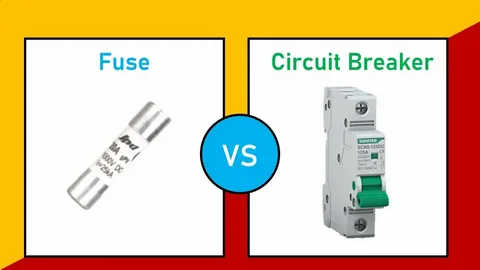
A fuse is one of the oldest and simplest forms of electrical protection. It consists of a metal element enclosed within a protective housing.
The metal element is carefully designed to melt when the current exceeds a predetermined level. Once it melts, the electrical circuit is interrupted and power stops flowing.
The basic components of a fuse include:
- Fuse body
- Conductive metal element
- Protective enclosure
- Terminal connections
Despite their simplicity, fuses remain highly effective protective devices.
How a Fuse Works
Under normal conditions, electrical current flows through the fuse element without difficulty. However, if the current rises beyond the fuse’s rated capacity, the metal element begins to heat up.
Eventually, the heat becomes sufficient to melt the element. When this occurs, the circuit opens, and electrical flow stops immediately.
The fuse effectively sacrifices itself to protect the rest of the electrical system.
The process involves:
- Excess current develops.
- The fuse element heats up.
- The element melts.
- Power flow stops.
This rapid response helps prevent further damage.
Why Fuses Are Considered Sacrificial Devices
One defining characteristic of a fuse is that it cannot be reused after it operates. Once the internal metal element melts, the fuse must be replaced before the circuit can function again.
This is why fuses are often called sacrificial devices.
After activation:
- The fuse no longer conducts electricity.
- A replacement is required.
- Circuit operation cannot resume until replacement occurs.
This feature distinguishes fuses from circuit breakers.
Advantages of Fuses
Despite being an older technology, fuses continue to offer several advantages.
Their simple design contributes to reliable operation and rapid response during fault conditions.
Benefits of fuses include:
- Simple construction
- Fast operation
- High reliability
- Low cost
Because they contain few components, fuses often perform consistently over long periods.
Limitations of Fuses
Although effective, fuses also have limitations that affect their practicality in some situations.
The most obvious drawback is the need for replacement after the operation.
Additional limitations include:
- Single-use design
- Maintenance requirements
- Replacement inventory needs
- Potential inconvenience
These factors contributed to the growing popularity of circuit breakers in modern installations.
What Is a Circuit Breaker?
A circuit breaker is an electrical protection device designed to interrupt power automatically when unsafe conditions occur.
Unlike a fuse, a circuit breaker can usually be reset and reused after it trips.
Circuit breakers are commonly found in:
- Residential electrical panels
- Commercial buildings
- Industrial facilities
- Utility systems
Today, they are the most common form of circuit protection in homes.
How a Circuit Breaker Works
Circuit breakers continuously monitor the electrical current flowing through a circuit. When the current exceeds safe levels, internal mechanisms trigger the breaker to open the circuit.
Once opened, electricity can no longer flow until the breaker is reset.
The process generally follows these steps:
- Excessive current develops.
- Detection mechanisms activate.
- Internal contacts separate.
- Power flow stops.
The breaker remains open until manually or automatically reset.
The Internal Components of a Circuit Breaker
Modern circuit breakers contain several sophisticated components that allow them to detect faults and interrupt current safely.
Important components include:
| Component | Function |
| Contacts | Carry electrical current |
| Trip mechanism | Initiates interruption |
| Arc control system | Manages electrical arcs |
| Housing | Provides protection |
These components work together to ensure reliable operation.
Thermal Protection in Circuit Breakers
Many circuit breakers use thermal protection to detect overload conditions.
When excessive current flows for an extended period, a component inside the breaker heats up. As the temperature increases, the mechanism eventually triggers the breaker.
Thermal protection is particularly effective for:
- Gradual overloads
- Sustained excessive current
- Equipment protection
This method mirrors the heating effects that occur in overloaded circuits.
Magnetic Protection in Circuit Breakers
In addition to thermal protection, many breakers also use magnetic protection.
Magnetic systems respond rapidly to sudden surges in current, such as those produced by short circuits.
Benefits include:
- Fast fault detection
- Improved protection
- Enhanced system safety
Combining thermal and magnetic protection creates a versatile safety device.
Why Circuit Breakers Can Be Reset
Unlike fuses, circuit breakers do not rely on melting components.
Instead, they use mechanical systems that can reopen and close repeatedly.
After a fault is corrected, users can typically restore operation by:
- Identifying the cause
- Resetting the breaker
- Restoring power
This reusability is one reason circuit breakers became widely adopted.
Advantages of Circuit Breakers
Circuit breakers offer several practical advantages in modern electrical systems.
Their ability to be reset improves convenience and reduces maintenance requirements.
Benefits include:
- Reusable operation
- Easy fault identification
- Improved convenience
- Reduced replacement costs
These advantages make them popular in residential installations.
Limitations of Circuit Breakers
Although circuit breakers provide many benefits, they are not perfect.
Potential disadvantages include:
- Higher initial cost
- Greater mechanical complexity
- More components that can wear over time
However, these drawbacks are often outweighed by their convenience and versatility.
Key Differences Between Circuit Breakers and Fuses
Although both devices protect electrical circuits, several important differences distinguish them.
| Feature | Fuse | Circuit Breaker |
| Reusable | No | Yes |
| Replacement required | Yes | No |
| Initial cost | Lower | Higher |
| Convenience | Lower | Higher |
| Operation method | Melts element | Trips mechanism |
These differences influence where each technology is used.
Which Device Responds Faster?
In many situations, fuses can respond extremely quickly to fault conditions.
Their simple design allows immediate interruption when excessive current causes the fuse element to melt.
Advantages of fuse response include:
- Rapid fault clearing
- Effective short-circuit protection
- Consistent performance
However, actual response times vary depending on design and application.
Why Modern Homes Use Circuit Breakers
Most modern residential electrical systems rely on circuit breakers rather than fuses.
Homeowners appreciate the convenience of simply resetting a breaker instead of replacing a blown fuse.
Reasons for widespread adoption include:
- Ease of use
- Improved convenience
- Reduced maintenance
- Better troubleshooting capabilities
These benefits align well with residential needs.
Where Fuses Are Still Used
Despite the popularity of circuit breakers, fuses remain common in many applications.
Examples include:
- Electronic devices
- Automotive systems
- Industrial equipment
- Specialized machinery
In some cases, their fast response characteristics make them particularly valuable.
What Happens When a Breaker Trips?
When a circuit breaker trips, power is disconnected from the affected circuit.
This action indicates the breaker detected conditions that exceeded safe operating limits.
Possible causes include:
- Circuit overloads
- Short circuits
- Equipment faults
- Ground faults
Identifying the underlying cause is important before resetting the breaker.
What Happens When a Fuse Blows?
When a fuse blows, the internal metal element melts and permanently interrupts the circuit.
The affected equipment loses power until the fuse is replaced.
Common signs include:
- Loss of power
- Visible fuse damage
- Open electrical circuit
Replacement is required before normal operation can resume.
Safety Considerations for Homeowners
Whether a system uses fuses or circuit breakers, safety remains the top priority.
Important practices include:
- Avoiding overloaded outlets
- Using properly rated devices
- Reporting electrical issues
- Seeking professional assistance when needed
Proper electrical maintenance helps ensure protective devices function effectively.
The Future of Circuit Protection
Electrical protection technology continues evolving as power systems become more sophisticated.
Modern innovations include:
- Smart breakers
- Remote monitoring
- Advanced diagnostics
- Integrated protection systems
These developments may further improve safety and convenience.
Why Understanding Circuit Protection Matters
Most people interact with electricity daily but rarely think about the protective devices safeguarding their homes and equipment.
Understanding circuit breakers and fuses helps individuals:
- Recognize electrical problems
- Respond appropriately to faults
- Improve household safety
Knowledge of these systems promotes safer and more informed electrical usage.
FAQs
1. What is the main difference between a fuse and a circuit breaker?
A fuse must be replaced after it operates, while a circuit breaker can usually be reset and reused.
2. Which is safer, a fuse or a circuit breaker?
Both are safe when properly designed and installed. Each provides effective protection against excessive current.
3. Why do modern homes typically use circuit breakers?
Circuit breakers offer greater convenience because they can be reset instead of replaced after a fault occurs.
4. Can a blown fuse be repaired?
No. Once a fuse element melts, the fuse must be replaced with a properly rated replacement.
5. What causes a circuit breaker to trip?
Common causes include overloaded circuits, short circuits, equipment malfunctions, and ground faults.
Conclusion:
Circuit breakers and fuses share the same essential mission: protecting electrical systems from dangerous levels of current that could damage equipment, overheat wiring, or create fire hazards. However, they achieve this protection through different methods. Fuses interrupt power by sacrificing a metal element that melts during fault conditions, while circuit breakers rely on reusable mechanical mechanisms that trip when unsafe current levels are detected. Although modern homes predominantly use circuit breakers because of their convenience and reset capability, fuses continue to play an important role in many electronic, automotive, and industrial applications. Understanding the differences between these two technologies provides valuable insight into the safety systems that quietly protect electrical infrastructure every day.
CTA: Learn More About Electrical Safety and Power Systems
Circuit breakers and fuses are only one part of the larger electrical systems that power homes, businesses, and industries. By learning more about wiring, transformers, electrical panels, power distribution, and energy management, you can develop a deeper understanding of how electricity is delivered safely and efficiently. Continued education about electrical systems helps promote safer practices, better decision-making, and greater appreciation for the technologies that support modern life.