
Electricity is one of the most fundamental systems powering modern civilization, yet it is far from uniform across the world. One of the most noticeable differences travelers and engineers encounter is the variation in household voltage standards. Some countries operate on approximately 110V systems, while others rely on 220V to 240V systems for residential and commercial electricity.
At first glance, this difference may seem arbitrary or even confusing, especially in an era where technology is globally standardized. However, the reasons behind these voltage systems are deeply rooted in history, engineering trade-offs, and economic decisions made over a century ago. Once established, these systems became extremely difficult to replace, shaping how entire nations design their electrical infrastructure today.
The Historical Origins of 110V and 220V Systems
The story of global voltage differences begins in the late 19th and early 20th centuries, during the early development of electrical power distribution. At that time, there was no international standard for electricity, and different inventors and companies experimented with various voltages depending on their technology and local needs.
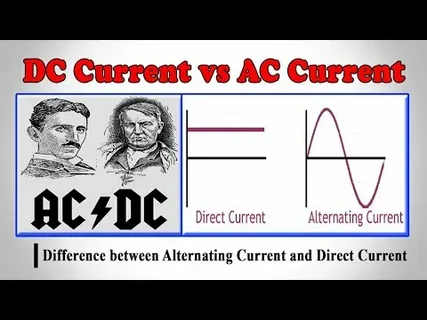
In the United States, early electrical systems developed around direct current (DC) technology, heavily influenced by Thomas Edison. These systems commonly used around 110 volts, which was considered a practical balance between safety and performance for early incandescent lighting systems. When alternating current (AC) later replaced DC, the existing infrastructure largely remained unchanged.
In Europe and many other regions, electrical grids were developed later and more systematically. Engineers realized that higher voltages allowed more efficient transmission of electricity over long distances. As a result, 220V to 240V became the preferred standard in many countries.
Why early decisions still matter today
- Early electrical systems were built before global standardization existed
- Existing infrastructure made voltage changes extremely expensive
- Engineering advancements favored higher voltage for efficiency
- Countries locked into systems due to long-term investment costs
How Voltage Actually Works in Power Distribution
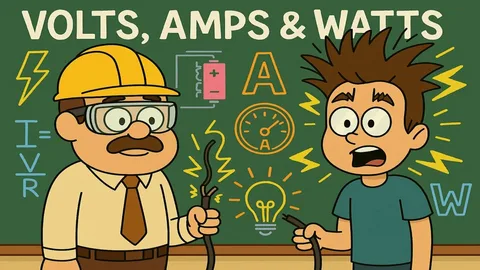
Voltage is essentially the electrical “pressure” that pushes current through a conductor. When power is transmitted, there is a balance between voltage, current, and resistance. For a given power requirement, increasing voltage allows current to decrease, which reduces energy losses in wires.
This is one of the key engineering reasons why many countries adopted 220V systems. Lower current means thinner cables can be used, and less energy is lost as heat during transmission. However, lower voltage systems like 110V reduce the severity of electrical shock risks under certain conditions.
Understanding this trade-off is essential to understanding why both systems continue to exist today instead of one replacing the other.
Core electrical behavior behind voltage systems
- Voltage determines how much electrical force drives current
- Higher voltage reduces current for the same power output
- Lower current reduces heat loss in transmission lines
- Safety and efficiency must be balanced in system design
Why 110V Systems Are Still Used Today
Despite the efficiency advantages of higher voltages, countries like the United States and Canada continue to use 110–120V systems for most household circuits. This is primarily due to historical infrastructure and the enormous cost of converting an entire national grid.
In these countries, homes are typically supplied with a split-phase system that also allows 240V for high-power appliances such as dryers, ovens, and air conditioners. This hybrid approach allows them to retain the safety advantages of lower voltage for general use while still supporting heavy-duty electrical equipment.
The decision to maintain 110V systems is therefore not based on technical inferiority but on practical and economic considerations.
Why 110V systems persist
- Massive cost of replacing nationwide infrastructure
- Existing appliances and wiring are already standardized
- Split-phase systems provide both 110V and 220V capability
- Safety perception for everyday household use remains important
Why 220V Became the Global Standard in Most Countries
Many countries outside North America adopted 220V–240V systems as their standard for residential electricity. One of the main reasons is efficiency in power distribution. Higher voltage systems allow electricity to be transmitted more efficiently, especially over long distances, which is important for national grids.
Additionally, when many countries were building or modernizing their electrical systems, they were not constrained by early 110V infrastructure. This allowed engineers to choose higher voltages based on improved understanding of electrical efficiency.
As industrialization expanded globally, the 220V standard became dominant in Europe, Asia, Africa, and many other regions.
Why 220V systems became widespread
- Improved efficiency in long-distance power transmission
- Later infrastructure development allowed better planning
- Reduced material costs for wiring and distribution
- Adoption spread through engineering standards and trade influence
Impact of Voltage Differences on Electrical Safety
Safety is one of the most discussed aspects when comparing 110V and 220V systems. While both can be dangerous under the right conditions, lower-voltage systems generally reduce the severity of electrical shock because less current tends to flow through the human body under accidental contact.
However, higher voltage systems are not inherently unsafe when proper protection mechanisms are used. Modern electrical installations include circuit breakers, grounding systems, and insulation standards that significantly reduce risks in both 110V and 220V environments.
In reality, most electrical safety depends more on system design and regulation than voltage alone.
Safety considerations in real-world systems
- Lower voltage can reduce shock severity in some cases
- Higher voltage systems require stricter insulation standards
- Circuit breakers and grounding systems ensure protection
- Proper installation matters more than voltage alone
Energy Efficiency Differences Between 110V and 220V
When comparing 110V vs. 220V systems, one of the most important technical differences is energy efficiency. Higher voltage systems can deliver the same amount of power using lower current, which directly reduces resistive losses in electrical wires. These losses occur as heat and become more significant when the current is high.
This is why 220V systems are generally preferred for large-scale or long-distance power distribution. However, at the household level, the difference in efficiency is often minimal because wiring distances are relatively short and modern materials reduce resistance losses significantly.
In practical terms, both systems are efficient enough for everyday residential use when properly designed.
Efficiency considerations in real-world usage
- Higher voltage reduces current for the same power load
- Lower current reduces heat loss in wiring systems
- Long-distance transmission benefits more from 220V systems
- Household efficiency differences are relatively small
How Appliances Are Designed for Different Voltages
Electrical appliances are manufactured based on the voltage standard of the country where they will be used. A device designed for 110V systems will typically have internal components optimized for lower voltage operation, while 220V appliances are built to handle higher input levels.
Using the wrong voltage can damage devices, reduce performance, or create safety hazards. This is why manufacturers clearly label voltage ratings on almost all electrical equipment.
Modern electronics such as phone chargers, laptops, and smart devices often include switching power supplies that support a wide voltage range, making them compatible worldwide.
Appliance voltage compatibility factors
- Devices are engineered for specific regional voltage standards
- Incorrect voltage can permanently damage electronics
- Dual-voltage devices support both 110V and 220V systems
- Modern chargers often automatically adapt to input voltage
Traveling Between Countries with Different Voltage Standards
International travel often highlights the importance of understanding voltage differences. A common misconception is that plug adapters are enough to use foreign electronics safely. However, plug adapters only change the shape of the outlet connection and do not convert voltage.
To safely use devices abroad, travelers must ensure their electronics support the local voltage or use a proper voltage converter. Without this, devices may overheat or fail instantly when plugged into incompatible systems.
This is especially important for high-power devices like hair dryers, electric kettles, and irons.
Important travel power considerations
- Plug adapters do not convert electrical voltage
- Dual-voltage devices are safest for international travel
- Voltage converters are needed for incompatible appliances
- High-wattage devices are most at risk of damage
Why a Global Voltage Standard Does Not Exist
Although a universal voltage standard might seem convenient, implementing one across the world is not realistic. The primary challenge is infrastructure. Every country has millions of kilometers of wiring, transformers, and electrical systems built around its existing voltage standard.
Changing this would require replacing or upgrading nearly every electrical component in a country, including household wiring, appliances, and industrial equipment. The cost would be enormous, and the benefits would not justify the disruption.
Instead, the global electrical industry has adapted by creating devices that can operate across multiple voltage systems.
Barriers to global standardization
- Existing infrastructure is too expensive to replace
- Billions of appliances are already voltage-specific
- Electrical grids are deeply integrated into national systems
- Universal devices reduce the need for standardization
Frequently Asked Questions
1. Why do different countries use different voltages?
Because electrical systems were developed independently before global standards existed, and each region adopted what worked best at the time.
2. Which is safer: 110V or 220V?
110V is generally considered less severe in shock risk, but both are safe when proper electrical protections are used.
3. Can I plug a 110V device into a 220V socket?
No, not without a converter. It can damage the device or create a safety hazard.
4. Why doesn’t the world switch to one voltage?
Because replacing global electrical infrastructure would be extremely expensive and impractical.
5. Do modern devices handle both voltages?
Yes, many modern electronics support 100–240V and work globally with just a plug adapter.
Conclusion
The difference between 110V and 220V systems is not about one being better than the other but about historical development, engineering decisions, and infrastructure evolution. Once established, electrical systems became deeply embedded into national grids, making change extremely difficult and costly.
Both voltage systems have proven to be reliable, safe, and efficient within their respective regions. While 220V offers advantages in power transmission efficiency and 110V provides certain safety perceptions, modern electrical design has minimized most practical differences between them.
Today, the global trend is not toward unifying voltage standards but toward creating devices that adapt to multiple systems seamlessly. This allows people to travel, work, and live across different countries without worrying about compatibility issues
Understanding Voltage Differences Matters More Than Ever
As technology becomes increasingly global, knowing how voltage systems work is essential for safety, convenience, and informed decision-making. Whether you are choosing appliances, traveling internationally, or simply learning about electrical systems, understanding the difference between 110V and 220V helps you avoid costly mistakes and improves your overall awareness of how electricity powers the modern world.