
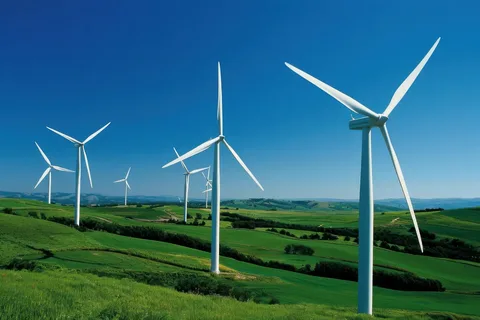
Wind power has become one of the fastest-growing sources of renewable energy in the world. Across vast open plains, offshore coastlines, and windy rural landscapes, towering wind turbines convert the natural movement of air into usable electricity. These impressive structures have become symbols of the global transition toward cleaner energy sources and a reduced dependence on fossil fuels.
At first glance, wind turbines may appear simple. The wind blows, the blades spin, and electricity is produced. However, behind this seemingly straightforward process lies a fascinating combination of aerodynamics, mechanical engineering, and electrical technology. Modern wind turbines are highly sophisticated machines designed to capture kinetic energy from moving air and transform it into electrical power that can be distributed through the electrical grid. Understanding how this process works provides valuable insight into one of the most important renewable energy technologies shaping the future of power generation.
What Is Wind Energy?
Wind energy is the energy contained within moving air. Wind is created when the sun heats different parts of the Earth’s surface unevenly. These temperature differences create pressure variations in the atmosphere, causing air to move from one area to another.
This moving air contains kinetic energy that can be captured and converted into electricity.
Wind energy offers several advantages:
- It is renewable
- It produces no direct emissions during operation
- It can generate large amounts of electricity
Because wind is constantly replenished by natural atmospheric processes, it serves as a sustainable energy resource.
Why Wind Power Has Become So Popular
As countries seek cleaner and more sustainable energy solutions, wind power has emerged as a major contributor to electricity generation. Advances in turbine technology, improved efficiency, and lower installation costs have made wind energy increasingly competitive.
Several factors have contributed to its growth.
| Benefit | Explanation |
| Renewable resource | Wind naturally replenishes itself |
| Low emissions | No fuel combustion during operation |
| Scalability | Suitable for small and large projects |
| Cost reductions | Technology improvements lower costs |
These advantages have encouraged significant investment in wind energy worldwide.
The Basic Principle Behind Wind Turbines
A wind turbine works by capturing the kinetic energy of moving air and converting it into electrical energy.
When wind passes over specially designed blades, it causes them to rotate. This rotational motion drives mechanical equipment inside the turbine, ultimately generating electricity.
The process involves several energy conversions:
- Wind energy becomes mechanical energy
- Mechanical energy becomes electrical energy
- Electricity enters the power grid
This transformation happens continuously whenever sufficient wind is available.
Understanding Kinetic Energy
Kinetic energy is the energy associated with motion. Anything that moves possesses kinetic energy, including vehicles, flowing water, and moving air.
Wind contains enormous amounts of kinetic energy because billions of air molecules move continuously through the atmosphere.
The amount of energy available depends on:
- Wind speed
- Air density
- Area swept by the turbine blades
Faster winds contain significantly more energy than slower winds.
The Main Components of a Wind Turbine
Modern wind turbines consist of several major components that work together to generate electricity efficiently.
Each component performs a specific function within the overall system.
| Component | Function |
| Blades | Capture wind energy |
| Rotor | Transfers blade motion |
| Nacelle | Houses major equipment |
| Generator | Produces electricity |
| Tower | Elevates the turbine above ground |
| Control systems | Monitor operations |
Together, these parts form a complete electricity-generating system.
How Wind Turbine Blades Work
The blades are among the most recognizable parts of a wind turbine. Their shape is carefully engineered to maximize energy capture.
Wind turbine blades function similarly to airplane wings. As air flows across the blade surfaces, differences in air pressure develop.
This pressure difference creates lift.
The resulting forces cause the blades to rotate around the turbine hub.
Important blade characteristics include:
- Aerodynamic shape
- Lightweight construction
- High-strength materials
Blade design strongly influences overall turbine performance.
Why Turbines Usually Have Three Blades
Most modern utility-scale wind turbines use three blades. Engineers have found this configuration offers an effective balance between efficiency, stability, and cost.
While turbines with different numbers of blades exist, three-blade designs dominate the industry.
Advantages include:
- Smooth operation
- Good energy capture
- Reduced vibration
- Reliable performance
This design has become the industry standard.
The Rotor: Capturing Rotational Energy
The rotor consists of the blades and the central hub connecting them.
As wind causes the blades to spin, the rotor rotates as a single unit.
The rotor’s job is to convert wind energy into rotational mechanical energy that can be transferred to other turbine components.
The larger the rotor diameter, the greater the area available to capture wind energy.
Benefits of larger rotors include:
- Increased energy production
- Better low-wind performance
- Improved efficiency
Rotor size plays a major role in turbine output.
What Is the Nacelle?
The nacelle is the large housing located behind the rotor at the top of the turbine tower.
It contains many of the turbine’s most important mechanical and electrical components.
Equipment inside the nacelle typically includes:
- Generator
- Gearbox
- Braking systems
- Control electronics
The nacelle protects these components from environmental conditions while allowing efficient operation.
How Mechanical Energy Reaches the Generator
When the rotor spins, its rotational energy must be transferred to the generator.
In many turbines, this occurs through a shaft and gearbox system.
The rotor turns relatively slowly compared to the speeds needed for electricity generation. The gearbox increases rotational speed before the motion reaches the generator.
This process allows:
- Efficient power conversion
- Improved generator performance
- Higher electricity output
Some newer designs use alternative approaches that eliminate traditional gearboxes.
The Role of the Generator
The generator is the component responsible for producing electricity.
As mechanical motion enters the generator, electromagnetic processes create an electrical current.
The generator transforms rotational energy into usable electricity that can be distributed throughout the electrical system.
This conversion is the final step in electricity production.
Key functions include:
- Producing electrical current
- Supporting grid integration
- Delivering power continuously
Without the generator, the turbine could not produce electricity.
How Electromagnetic Induction Creates Electricity
Wind turbine generators operate based on electromagnetic induction, a principle discovered in the nineteenth century.
When magnets move relative to conductive materials, an electrical current can be generated.
The process allows:
- Mechanical motion to create electricity
- Continuous energy conversion
- Reliable power generation
This same principle is used in many other types of power plants.
Why Turbines Need Tall Towers
Wind turbines are typically mounted on very tall towers. This is because wind speeds generally increase with height above the ground.
Higher elevations experience:
- Stronger winds
- More consistent airflow
- Reduced surface turbulence
Greater wind speeds translate into increased energy production.
| Tower Height Benefit | Result |
| Stronger winds | More power generation |
| Less turbulence | Smoother operation |
| Better consistency | Improved reliability |
Tower height is a major factor in turbine performance.
Understanding Wind Speed and Power Output
Wind speed has an enormous effect on electricity generation.
The relationship between wind speed and available energy is not linear. Small increases in wind speed can produce much larger increases in power output.
This makes site selection extremely important.
Factors influencing output include:
- Average wind speed
- Seasonal wind patterns
- Terrain conditions
Locations with strong winds generally produce more electricity.
What Is a Wind Farm?
A wind farm is a collection of multiple wind turbines operating together to generate electricity on a larger scale.
Wind farms can contain dozens or even hundreds of turbines.
Advantages of wind farms include:
- Large electricity production
- Improved efficiency
- Grid-scale energy generation
Wind farms may be located on land or offshore.
Onshore Wind Farms
Onshore wind farms are built on land and represent the most common form of wind energy development.
Suitable locations often include:
- Plains
- Agricultural regions
- Mountain passes
- Open rural areas
Onshore projects are generally easier and less expensive to construct than offshore installations.
Offshore Wind Farms
Offshore wind farms are located in oceans, seas, or large bodies of water.
These projects benefit from stronger and more consistent winds.
Advantages include:
- Higher wind speeds
- Greater energy production
- Reduced land-use conflicts
However, construction and maintenance can be more complex and costly.
How Electricity Reaches Homes and Businesses
Electricity generated by wind turbines must be integrated into the power grid before consumers can use it.
After generation, electricity typically passes through:
- Transformers
- Transmission lines
- Substations
- Distribution systems
This infrastructure delivers power to homes, schools, businesses, and industries.
Why Wind Energy Is Considered Renewable
Wind energy is classified as renewable because the natural processes that create wind continue indefinitely.
Unlike fossil fuels, wind resources are not depleted when used.
Renewable characteristics include:
- Continuous replenishment
- Sustainable availability
- No fuel extraction requirements
These qualities make wind an attractive long-term energy source.
Environmental Benefits of Wind Power
Wind energy offers several environmental advantages compared to conventional fossil fuel generation.
Because turbines do not burn fuel during operation, they avoid many emissions associated with traditional power plants.
Benefits include:
- Lower greenhouse gas emissions
- Reduced air pollution
- Decreased fossil fuel consumption
These advantages support climate and sustainability goals.
Challenges Associated With Wind Energy
Although wind power offers many benefits, it also presents challenges that must be managed.
One major challenge is variability. Wind speeds naturally fluctuate, affecting electricity generation.
Additional considerations include:
- Site selection requirements
- Infrastructure costs
- Grid integration needs
Energy planners account for these factors when developing projects.
How Energy Storage Helps Wind Power
Battery storage systems are becoming increasingly important for renewable energy integration.
When wind generation exceeds demand, excess electricity can be stored and used later.
Benefits of storage include:
- Improved grid reliability
- Better renewable utilization
- Enhanced flexibility
Energy storage helps address variability challenges.
Technological Advances in Modern Turbines
Wind turbine technology continues to evolve rapidly. Modern turbines are significantly larger, more efficient, and more reliable than earlier generations.
Recent improvements include:
- Larger rotor diameters
- Smarter control systems
- Advanced materials
- Improved generators
Innovation continues to increase wind energy’s effectiveness.
The Future of Wind Energy
Wind power is expected to remain a major component of future energy systems. Governments, utilities, and private companies continue investing heavily in wind projects worldwide.
Future developments may include:
- Larger offshore installations
- Better energy storage integration
- More efficient turbine designs
- Enhanced grid management systems
These advancements could further expand wind energy’s role in global electricity generation.
FAQs
1. How do wind turbines generate electricity?
Wind turbines capture the kinetic energy of moving air, convert it into rotational mechanical energy, and then use generators to produce electricity.
2. Why are wind turbines so tall?
Higher elevations generally experience stronger and more consistent winds, which improve energy production.
3. What is the purpose of the generator in a wind turbine?
The generator converts mechanical rotational energy into electrical energy that can be used by the power grid.
4. Do wind turbines work all the time?
No. Turbines require sufficient wind speeds to operate effectively, and electricity production varies with wind conditions.
5. What is the difference between onshore and offshore wind farms?
Onshore wind farms are built on land, while offshore wind farms are located in bodies of water where winds are often stronger and more consistent.
Conclusion:
Wind turbines are remarkable engineering systems that transform the natural movement of air into usable electricity through a series of carefully coordinated mechanical and electrical processes. By capturing the kinetic energy of wind with aerodynamic blades, transferring rotational motion through sophisticated equipment, and converting that motion into electrical power using generators, wind turbines provide a reliable source of renewable energy. As technology continues to improve and global demand for clean electricity increases, wind power is playing an increasingly important role in modern energy systems. Understanding how wind turbines work highlights not only the ingenuity behind renewable energy technologies but also the tremendous potential of harnessing natural resources to meet future energy needs sustainably.
CTA: Explore More About Renewable Energy Technologies
Wind power is just one of many innovative technologies transforming the global energy landscape. If you are interested in learning how electricity is generated, transmitted, stored, and managed, continue exploring topics such as solar energy, battery storage, smart grids, and sustainable power systems. The more you understand renewable energy, the better equipped you will be to appreciate the technologies shaping the future of electricity.