
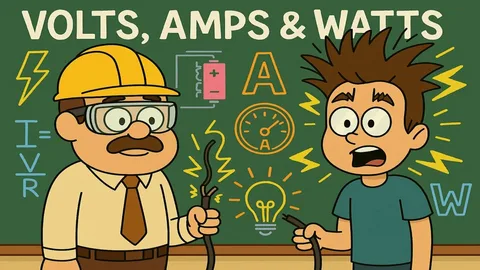
Electricity powers nearly every part of modern life. From charging smartphones and running kitchen appliances to operating industrial machinery and electric vehicles, electrical energy is constantly at work around us. Yet despite using electricity every day, many people find terms like watts, volts, and amps confusing. These measurements often appear on product labels, power bills, chargers, batteries, and electrical equipment, but their meanings are not always obvious.
Understanding watts, volts, and amps does not require an engineering degree. In fact, these concepts become much easier when explained using simple real-world examples. Learning the difference can help homeowners choose appliances more wisely, understand energy consumption, troubleshoot electrical issues, and make smarter decisions about power usage. Once you understand how these three measurements work together, electricity becomes far less mysterious.
Why Understanding Electrical Measurements Matters
Most electrical devices display information about voltage, current, and power. Understanding these values helps consumers make informed decisions and use equipment safely.
Knowing the basics can prevent confusion when comparing electrical products.
- Helps understand appliance ratings
- Makes energy consumption easier to calculate
- Improves electrical safety awareness
What Is Electricity in Simple Terms?
Electricity is the movement of tiny charged particles called electrons through a conductor such as a wire. For electricity to do useful work, it needs pressure, flow, and energy transfer.
This is where volts, amps, and watts come into play.
- Voltage provides the electrical pressure
- Current measures the flow of electricity
- Power measures the work being done
Think of Electricity Like Water in a Pipe
One of the easiest ways to understand electrical concepts is through a water system analogy.
Imagine water flowing through a garden hose.
| Electrical Term | Water Analogy |
| Volts | Water pressure |
| Amps | Amount of water flowing |
| Watts | Total water power delivered |
This comparison simplifies how electricity behaves in a circuit.
What Are Volts?
Voltage measures electrical pressure. It represents the force that pushes electrons through a circuit.
Without voltage, electricity would not move.
You can think of voltage as the pressure behind the water in a hose.
- Higher voltage means more electrical pressure
- Voltage pushes current through circuits
- Measured in volts (V)
Everyday Examples of Voltage
Different devices operate at different voltages depending on their design and purpose.
Here are some common examples:
| Device | Typical Voltage |
| AA Battery | 1.5 V |
| Car Battery | 12 V |
| USB Charger | 5 V |
| Household Outlet (US) | 120 V |
| Household Outlet (Many Countries) | 220-240 V |
The voltage itself does not tell you how much power a device uses.
What Are Amps?
Amps measure electrical current. Current refers to how many electrons are flowing through a circuit at a given moment.
The unit of measurement is the ampere, commonly shortened to amp.
Think of amps as the amount of water flowing through a pipe.
- More amps mean more electrical flow
- Current powers electrical devices
- Measured in amperes (A)
Why Current Is Important
Current determines how much electricity is actually moving through a system.
A device may have high voltage but low current, or low voltage but high current.
Current affects:
- Wire sizing
- Circuit breaker ratings
- Device performance
What Are Watts?
Watts measure electrical power.
Power represents how much electrical energy is being used or delivered over time.
This is usually the number consumers care about most because it reflects actual energy usage.
- Watts indicate energy consumption
- Higher watts often mean greater power output
- Measured in watts (W)
How Watts Relate to Volts and Amps
Power combines voltage and current.
The relationship is:
Watts = Volts × Amps
This simple equation explains how electrical systems work together.
For example:
- 120 volts × 5 amps = 600 watts
- 240 volts × 5 amps = 1200 watts
The same current can produce different amounts of power depending on the voltage.
Understanding the Relationship Between All Three
Think of an electrical circuit as a complete system.
| Measurement | What It Represents |
| Volts | Electrical pressure |
| Amps | Electrical flow |
| Watts | Total power produced |
Each measurement plays a different role.
Together, they determine how electricity performs useful work.
A Simple Garden Hose Example
Imagine watering your garden.
Voltage is the pressure pushing water through the hose.
Current is the amount of water flowing.
Power is the total watering effect produced.
If you increase either pressure or flow, the watering power increases.
Electricity behaves similarly.
Why Appliance Labels Show Watts
Most consumers notice wattage ratings first because watts directly indicate energy usage.
Examples include:
| Appliance | Approximate Wattage |
| LED Bulb | 8-15 W |
| Laptop Charger | 45-100 W |
| Microwave | 800-1500 W |
| Hair Dryer | 1200-2000 W |
| Electric Heater | 1500 W |
Higher wattage generally means greater energy consumption.
Why Phone Chargers Have Different Ratings
Phone chargers often display voltage and current values.
For example:
- 5V, 2A
- 9V, 2A
- 20V, 3A
These ratings determine charging power.
A charger delivering higher wattage can often charge devices faster.
Understanding Fast Charging
Modern smartphones use higher wattages to reduce charging times.
A charger may increase voltage, current, or both to deliver more power.
For example:
| Charger | Power Output |
| 5V × 2A | 10 W |
| 9V × 2A | 18 W |
| 20V × 3A | 60 W |
More power means faster energy transfer.
How Household Circuits Use Volts and Amps
Every home contains electrical circuits designed to safely carry specific amounts of current.
Circuit breakers protect these circuits from excessive electrical flow.
Common examples include:
- 15-amp circuits
- 20-amp circuits
- Higher-capacity appliance circuits
The breaker trips when the current exceeds safe limits.
Why High Amps Can Be Dangerous
Many people assume voltage is always the main danger.
While voltage matters, current is often what causes injury because it determines how much electricity flows through the body.
This is why electrical safety is extremely important.
- High current can cause severe harm
- Proper insulation reduces risk
- Circuit protection devices improve safety
Understanding Ohm’s Law
Electrical systems also involve resistance.
Resistance opposes electrical flow.
The relationship among voltage, current, and resistance is explained by Ohm’s Law.
genui{“physics_learning_block”:{“type_id”:”OHMS_LAW”}}
This principle is one of the foundations of electrical engineering.
Why Resistance Matters
Resistance affects how easily current can flow.
Examples include:
- Thin wires create more resistance
- Heating elements use resistance intentionally
- Insulation blocks electrical flow
Every electrical circuit contains some resistance.
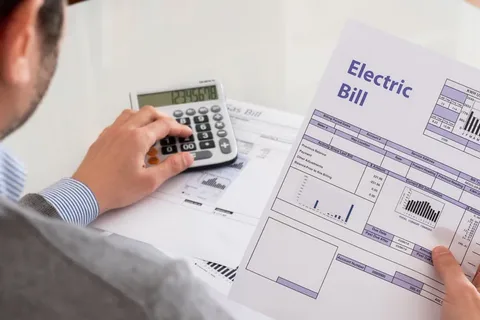
How Electric Bills Use Watts
Electric companies typically charge customers based on energy consumption.
This consumption is measured in kilowatt-hours (kWh).
A kilowatt equals 1,000 watts.
For example:
| Device | Usage |
| 1000 W Heater | 1 hour = 1 kWh |
| 100 W Bulb | 10 hours = 1 kWh |
| 2000 W Appliance | 30 minutes = 1 kWh |
Understanding wattage helps estimate electricity costs.
Why LED Bulbs Save Energy
Traditional incandescent bulbs convert much of their energy into heat.
LED bulbs produce similar brightness using far fewer watts.
| Bulb Type | Typical Wattage |
| Incandescent | 60 W |
| CFL | 13 W |
| LED | 8-10 W |
Lower wattage means lower energy consumption.
Volts, Amps, and Electric Vehicles
Electric vehicles rely heavily on voltage, current, and power calculations. Battery systems often operate at hundreds of volts. Higher voltages help reduce current requirements while delivering significant power.
Benefits include:
- Faster charging
- Improved efficiency
- Reduced energy losses
Why Power Tools List Watts
Power tools often advertise wattage because it reflects available power. Higher wattage tools can usually perform more demanding tasks. However, efficiency and design also matter. Power ratings help compare equipment.
Understanding Power Supplies
Computers and electronic devices use power supplies that convert electricity into usable forms.
Power supply labels often display:
- Input voltage
- Output voltage
- Maximum current
- Wattage capacity
These ratings ensure compatibility and safe operation.
Common Misconceptions About Watts, Volts, and Amps
Many beginners confuse these measurements.
Here are some common misunderstandings.
| Myth | Reality |
| Volts equal power | Watts measure power |
| More volts always means danger | Current also matters |
| Amps and watts are identical | They measure different things |
| Higher wattage is always better | Efficiency matters too |
Understanding the differences prevents confusion.
Practical Example: Electric Kettle
Suppose an electric kettle operates at:
- 120 volts
- 12.5 amps
Power calculation:
120 × 12.5 = 1500 watts
This means the kettle uses 1500 watts while operating.
The high wattage allows water to heat quickly.
Practical Example: Laptop Charger
A laptop charger might provide:
- 20 volts
- 3 amps
Power output:
20 × 3 = 60 watts
This power is sufficient to run and charge the laptop.
Why Learning These Concepts Is Useful
Even basic knowledge of electrical measurements offers practical benefits.
It helps consumers:
- Compare products accurately
- Understand energy costs
- Choose compatible chargers
- Improve electrical safety
- Use appliances more efficiently
These skills become increasingly valuable as homes adopt more electronic devices.
FAQs
1. What is the easiest way to remember volts, amps, and watts?
Think of a water hose. Volts are pressure, amps are flow, and watts are the total power delivered.
2. Which is more important, volts or amps?
Neither is more important. They work together to determine power output and electrical performance.
3. How do you calculate watts?
Multiply volts by amps. For example, 120 volts × 5 amps equals 600 watts.
4. Why do appliances show wattage ratings?
Wattage indicates how much electrical power a device uses, helping consumers estimate energy consumption.
5. Can two devices have the same wattage but different voltages?
Yes. Different combinations of voltage and current can produce the same wattage.
Conclusion:
Understanding the difference between watts, volts, and amps is one of the most useful fundamentals of electricity. While these terms may initially seem technical, they become much easier to grasp when viewed as parts of a simple system. Voltage provides the electrical pressure, current measures the flow of electricity, and watts represent the total power being delivered. Together, these measurements explain how electrical devices operate, how energy is consumed, and why certain appliances require more power than others. Whether you are choosing a charger, comparing appliances, understanding your electricity bill, or simply learning how modern technology works, knowing the roles of volts, amps, and watts provides a strong foundation for making smarter and safer decisions about electricity.
CTA: Learn More About How Electricity Powers Your Everyday Life
The more you understand basic electrical concepts, the easier it becomes to make informed decisions about appliances, energy efficiency, and home power usage. Continue exploring topics like electrical safety, energy consumption, renewable power systems, and household circuits to build practical knowledge that can save money, improve efficiency, and help you better understand the technology you use every day.